Cartilage & Chondrocyte Models
AED is studied as a cartilage-associated bioregulator, with chondrocyte proliferation and matrix markers as measured endpoints in cell-culture research.


Tripeptide studied in cartilage and connective-tissue models
Free Shipping on orders over $200
Scan the QR code on any vial to verify its batch, COA, and origin in seconds. Secure traceability from our lab to your bench.
Researchers also added
Research use only.
Cartalax is a peptide made of three amino acids: alanine, glutamic acid and aspartic acid. It comes from the same short-peptide bioregulator research as Pinealon and Epithalon. It is studied in cartilage and connective-tissue models. Peptides this short are studied for direct interaction with DNA rather than for binding a receptor. That is an unusual mechanism.
AED short-peptide bioregulator (Ala-Glu-Asp tripeptide)
The numbers that define Cartalax and how it is being studied. For laboratory research use only.
Ala-Glu-Asp (AED) tripeptide
One-letter code for Ala-Glu-Asp
The pathways Cartalax acts on - and what each one does. The animation traces its signal outward from the compound to every target it engages.
Cartalax is a short tripeptide (Ala-Glu-Asp). Research from the Khavinson group proposes that peptides of this class interact with chromatin and the promoter regions of specific genes, influencing transcription of tissue-specific proteins.
AED is studied as a bioregulator for cartilage and connective tissue. Cell-culture research has examined its effect on chondrocytes and fibroblasts, with proliferation and extracellular-matrix markers as measured endpoints.
Short-peptide bioregulators are investigated in models of cellular aging. For AED, studies have examined markers of proliferation and apoptosis in aging connective-tissue cell cultures.
The main areas Cartalax is being studied for - and the study-reported figures behind them.
AED is studied as a cartilage-associated bioregulator, with chondrocyte proliferation and matrix markers as measured endpoints in cell-culture research.
Short peptides of this class are studied as regulators of gene expression and protein synthesis, with proposed binding to specific DNA promoter regions.
AED is investigated in aging cell-culture models, measuring proliferation and apoptosis markers in connective-tissue cells.
Cartalax is studied alongside other short-peptide bioregulators in research on joint and connective-tissue biology.
An interactive 3D model rendered from the compound record - rotate and explore its structure.
C12H19N3O8
| Chemical Name | Cartalax (Ala-Glu-Asp) |
| Sequence | L-Alanyl-L-Glutamyl-L-Aspartic acid (AED tripeptide) |
| Molecular Weight | 333.29 g/mol |
| Molecular Formula | C₁₂H₁₉N₃O₈ |
| Form | Lyophilized powder |
| Purity | ≥99% (HPLC verified) |
| Testing | Third-party HPLC, Mass Spec, Endotoxin |
| Storage | -20°C for long-term stability |
| Solubility | Water-soluble |
| COA | Included with every order |
Cartalax is a synthetic tripeptide, Ala-Glu-Asp (AED), from the short-peptide bioregulator research of the Khavinson group. It is studied in cartilage and connective-tissue models.
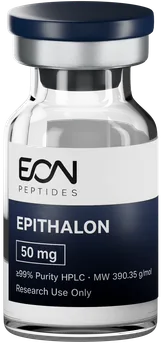
All three are short-peptide bioregulators from the same line of research. Pinealon (EDR) is studied in neuronal models, Epithalon (AEDG) in pineal and telomere research, and Cartalax (AED) in cartilage and connective-tissue models.
Cartalax has a molecular weight of 333.29 g/mol. Every vial is supplied at ≥99% purity, verified by HPLC, with a Certificate of Analysis included.
Store lyophilized vials at -20°C for long-term stability, protected from light and moisture.
No. Cartalax is sold strictly as a research compound for laboratory and in-vitro use only. It is not intended for human or animal consumption, diagnosis, or treatment.
Not for human or veterinary use. For in-vitro laboratory research only. These statements have not been evaluated by the FDA; this product is not intended to diagnose, treat, cure, or prevent any disease. Sold exclusively to qualified researchers and institutions.