
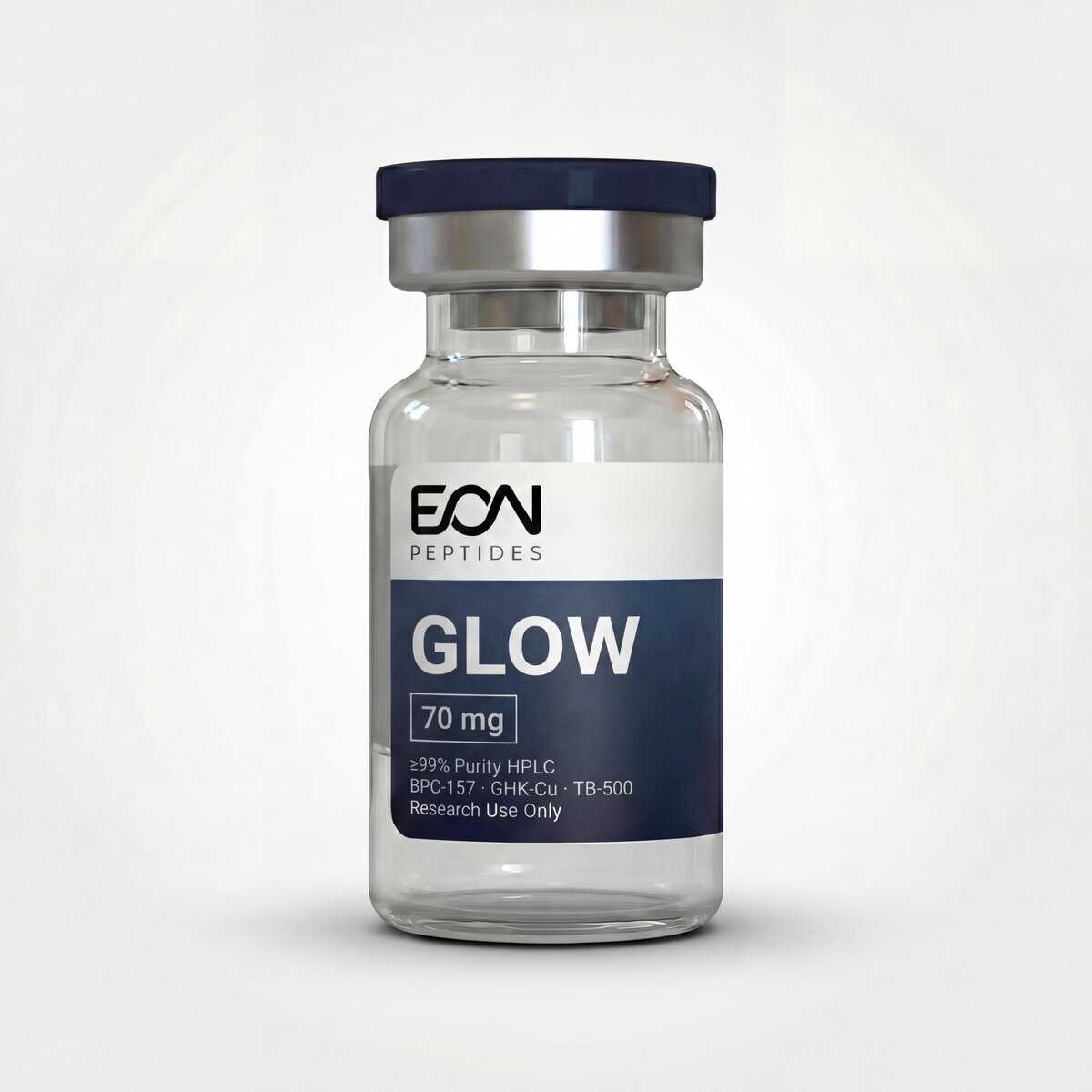
Molecular data
| Physical form | Lyophilized Powder |
|---|---|
| Available sizes | 70mg |
How it works
-
BPC-157
VEGF Pathway
Vessel formation, tissue granulation and nitric oxide signalling have been measured as endpoints in preclinical models.
- Vessel formation measured
- Tissue granulation scored
- Modulates nitric oxide signaling
-
TB-500
Actin Regulation
Cell migration, cytoskeletal remodelling and fibrotic scarring are measured via the thymosin beta-4 pathway.
- Cell migration measured
- Cytoskeletal remodelling observed
- Fibrotic scarring scored
-
GHK-Cu
Collagen & ECM Remodeling
Type I and III collagen synthesis measured, expression changes reported across 4,000+ genes, and copper delivered to tissue during extracellular matrix turnover.
- Type I & III collagen measured
- Modulates 4,000+ genes
- Delivers copper to tissue
What the research shows
-
Dermal
Dermal Models
GHK-Cu is studied for collagen synthesis; BPC-157 and TB-500 in epithelial and scarring models.
-
Mechanistic
Cytoskeletal & Vascular
TB-500 is characterised for actin remodelling; tendon fibroblast viability is measured for BPC-157; vascularisation endpoints for GHK-Cu.
-
Matrix
Anti-Inflammatory
All three peptides demonstrate anti-inflammatory properties through different mechanisms in animal models.
-
Structural
ECM Remodeling
Extracellular matrix deposition and fibrotic scoring as combined endpoints.
Specification
| Components | BPC-157 + TB-500 + GHK-Cu |
|---|---|
| Strength | 70mg |
| Form | Lyophilized powder |
| Purity | ≥99% (HPLC verified per component) |
| Testing | Third-party HPLC, Mass Spec, Endotoxin |
| Storage | -20°C for long-term stability |
| Light sensitivity | Protect from direct light at all times |
| Solubility | Water-soluble |
| COA | Included with every order |
| Appearance | White to off-white powder |
| Stability | 24 months from manufacture date when stored properly |
How it's tested
Every lot of Glow released to the catalog carries a third-party certificate of analysis. 6 documented lots are on file for this compound, with reported HPLC purity from 99.54% to 99.91% (mean 99.72%), issued by Accurate Test Labs and Freedom Diagnostics. 3 of 6 certificates record identity as confirmed.
- Documented lots
- 6
- Reported purity
- 99.54% to 99.91%
- Mean purity
- 99.72%
- Issuing labs
- Accurate Test Labs, Freedom Diagnostics
- 2026-09-03 Lot GL-090226-70Accurate Test Labs 99.84% View certificate
- 2026-06-03 Lot GLOW-062026-4Freedom Diagnostics 99.68% View certificate
- 2026-05-27 Lot Auth2605270309Freedom Diagnostics 99.80% View certificate
Frequently asked questions
What is GLOW and what does it contain?
GLOW is a research peptide blend containing three peptides: BPC-157 (Body Protection Compound), TB-500 (Thymosin Beta-4), and GHK-Cu (copper peptide). Each is characterised on a different pathway - vascular, cell migration, and collagen synthesis respectively.
How do the three peptides work together?
In preclinical research, vessel formation (angiogenesis) is measured for BPC-157, cell migration via actin regulation for TB-500, and collagen production plus expression changes across 4,000+ genes for GHK-Cu. The three cover distinct pathways, which is the rationale for combining them.
Is GLOW FDA approved?
No. GLOW is not approved by the FDA for any medical use. It is sold exclusively for in vitro laboratory research purposes. The individual components have varying levels of preclinical evidence but no completed human clinical trials for the combined blend.
How should GLOW be stored?
Store lyophilized (powder) form at -20°C for maximum stability. Protect from direct light at all times and avoid repeated freeze-thaw cycles.
What purity testing is performed?
Each component undergoes independent third-party testing including HPLC (High Performance Liquid Chromatography) for purity verification, mass spectrometry for molecular weight confirmation, and endotoxin testing. Certificates of Analysis are included with every order.
What is the research evidence for this blend?
The rationale is based on individual component research in preclinical models. The combined blend has not been characterised as a single formulation. Complementarity is inferred from mechanism.
Selected preclinical literature
9 published studies on the components of Glow, limited by rule to animal models and cell-based (in vitro) work indexed in PubMed. Human trials, case reports and literature overviews are excluded. Glow is a blend, so papers are listed per component. Titles appear as published and each links to its PubMed record; the list was resolved against PubMed on 2026-10-12. A listing describes what a study examined, not a property of the material supplied.
-
GHK-Cu · C. elegans model and in vitro
The GHK-Cu delays aging in Caenorhabditis elegans via coordinated regulation of mitochondrial function and activation of DAF-16/SKN-1 pathways
Biogerontology, 2026. PubMed PMID 42084774 · doi:10.1007/s10522-026-10444-x
-
GHK-Cu · Mice model
Protective effects of GHK-Cu in bleomycin-induced pulmonary fibrosis via anti-oxidative stress and anti-inflammation pathways
Life sciences, 2020. PubMed PMID 31809714 · doi:10.1016/j.lfs.2019.117139
-
GHK-Cu · Rats model
Hydrogels based on low-methoxyl amidated citrus pectin and flaxseed gum formulated with tripeptide glycyl-l-histidyl-l-lysine improve the healing of experimental cutting wounds in rats
International journal of biological macromolecules, 2020. PubMed PMID 33031852 · doi:10.1016/j.ijbiomac.2020.09.251
-
BPC-157 · Rats model
Protective effects of BPC 157 in rats with experimentally induced lower extremity ischemia-reperfusion injury
Scientific reports, 2026. PubMed PMID 42204242 · doi:10.1038/s41598-026-55449-1
-
BPC-157 · Rats model
Effects of BPC-157 and TB-500 on Achilles tendon healing in rats: A histopathological and biomechanical study
Joint diseases and related surgery, 2026. PubMed PMID 42542926 · doi:10.52312/jdrs.2026.2951
-
BPC-157 · Rats model
Duodenocolic fistula healing by pentadecapeptide BPC 157 in rats. A cytoprotection viewpoint
Journal of physiology and pharmacology : an official journal of the Polish Physiological Society, 2024. PubMed PMID 38583442 · doi:10.26402/jpp.2024.1.09
-
TB-500 · Mice model and in vitro
Decidualization-empowered ECM hydrogel integrating sustained Tβ4 release drives endometrial regeneration in intrauterine adhesions
Nature communications, 2026. PubMed PMID 41565687 · doi:10.1038/s41467-026-68677-w
-
TB-500 · Mice model and in vitro
Plasmacytoid dendritic cells alleviate allergic asthma via airway epithelial cell-dependent thymosin β4 expression
The Journal of allergy and clinical immunology, 2025. PubMed PMID 39978686 · doi:10.1016/j.jaci.2025.01.047
-
TB-500 · Rats model
Tβ4-Engineered ADSC Extracellular Vesicles Rescue Cell Senescence Through Separable Microneedle Patches for Diabetic Wound Healing
Advanced science (Weinheim, Baden-Wurttemberg, Germany), 2025. PubMed PMID 40279568 · doi:10.1002/advs.202505009
Related monographs
For laboratory research use only. Not a drug, supplement, or medical product; not for human or animal use. All findings referenced are from published preclinical/laboratory research.