Amylin Receptor Research
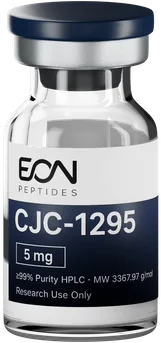
Amylin signalling is a growing focus of metabolic research, and Cagri is a long-acting amylin analogue used as a reference compound in that work.


Amylin Receptor Studies
Free Shipping on orders over $200
Scan the QR code on any vial to verify its batch, COA, and origin in seconds. Secure traceability from our lab to your bench.
Researchers also added
Research use only.
Cagri is a long-acting analogue of amylin, a peptide hormone released alongside insulin from pancreatic beta cells. It activates amylin receptors and the related calcitonin receptor. Research has measured satiety signalling, food intake and gastric emptying. A fatty acid chain lets it bind albumin, which extends its half-life to about a week.
Long-acting amylin analogue (amylin/calcitonin receptor agonist)
The numbers that define Cagri and how it is being studied. For laboratory research use only.
Albumin-bound lipidated design
Amylin (AMY1-3) and calcitonin (CTR)
The pathways Cagri acts on - and what each one does. The animation traces its signal outward from the compound to every target it engages.
Binds amylin receptors (calcitonin receptor paired with RAMP1-3). Published characterisation describes satiety signalling, slowed gastric emptying and suppression of post-meal glucagon in study models.
Also activates the calcitonin receptor directly, a non-selective profile examined alongside its amylin receptor activity. Hindbrain regions such as the area postrema are the main sites studied.
Structural changes reduce the fibrillation seen with native amylin, and a fatty-acid chain confers reversible albumin binding, extending the plasma half-life to roughly one week in research models.
The main areas Cagri is being studied for - and the study-reported figures behind them.
Amylin signalling is a growing focus of metabolic research, and Cagri is a long-acting amylin analogue used as a reference compound in that work.
Because amylin and GLP-1 act through different receptors, Cagri is studied alongside GLP-1 receptor agonists such as GLP-1 S in combination research.
Amylin's effects on post-meal glucagon and gastric emptying make Cagri a subject of glycemic pathway research.
Amylin receptors in the area postrema and connected hindbrain circuits modulate satiety, a focus of ongoing neuroscience research.
An interactive 3D model rendered from the compound record - rotate and explore its structure.
C194H312N54O59S2
How Cagri clears from circulation, modeled from its documented ~~7 days half-life. The curve draws as you scroll.
| Compound Class | Long-acting amylin analogue |
| Research Name | Cagri |
| Target | Amylin receptors (AMY1-3) and calcitonin receptor (CTR) |
| Form | Lyophilized powder |
| Molecular Weight | 4,409 g/mol |
| Purity | ≥99% (HPLC verified) |
| Testing | Third-party HPLC, Mass Spec, Endotoxin |
| Half-Life | ~7 days |
| Storage | -20°C for long-term stability |
| Solubility | Water-soluble |
| COA | Included with every order |
Cagri is a long-acting analogue of the pancreatic hormone amylin. It activates amylin receptors and the calcitonin receptor; published characterisation describes satiety signalling, slowed gastric emptying and suppression of post-meal glucagon.
The GLP compounds act on incretin receptors (GLP-1, GIP, glucagon). Cagri acts on a different system entirely: amylin and calcitonin receptors. That is why it is studied alongside GLP-1 receptor agonists in combination research.
Cagri has a molecular weight of 4,409 g/mol. Every vial is supplied at ≥99% purity, verified by HPLC, with a Certificate of Analysis included.
Store lyophilized vials at -20°C for long-term stability, protected from light and moisture.
No. Cagri is sold strictly as a research compound for laboratory and in-vitro use only. It is not intended for human or animal consumption, diagnosis, or treatment.
Not for human or veterinary use. For in-vitro laboratory research only. These statements have not been evaluated by the FDA; this product is not intended to diagnose, treat, cure, or prevent any disease. Sold exclusively to qualified researchers and institutions.