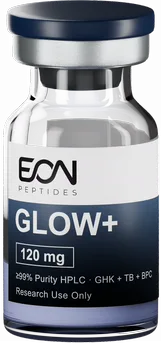
● In Stock
GLP2-TZ
≥99% Purity | HPLC Verified
Price range: $85.00 through $260.00
PASSED
Sterility & Endotoxins
PASSED
Net Content & Purity
Purity:
≥99%
Store at
-20°C
DPP-4 resistant GLP-2 analog. Promotes intestinal mucosal growth, barrier restoration, and nutrient absorption. Research use only.
Research Use OnlyNot for human or veterinary use. For in vitro laboratory research only.
| Size | 100mg, 10mg, 30mg, 60mg |
33
Amino Acids
GLP-2 analog with C-terminal extension
2×
Longer Half-Life
vs. native GLP-2 (DPP-IV resistance)
80+
Published Studies
GLP-2 analog research publications
99%+
Purity Verified
HPLC tested, COA included
How GLP-2-TZ Works
Intestinal GLP-2 receptor agonism and mucosal trophic signaling studied in intestinal adaptation research
GLP-2R Agonism
Glucagon-Like Peptide-2 Receptor Activation
GLP-2-TZ is a synthetic analog of glucagon-like peptide-2 (GLP-2), a 33-amino acid hormone secreted by enteroendocrine L-cells in the distal intestine. It binds and activates the GLP-2 receptor (GLP-2R), a G-protein coupled receptor expressed primarily on intestinal subepithelial myofibroblasts, enteric neurons, and intestinal epithelial cells. GLP-2R activation initiates trophic signaling cascades relevant to intestinal adaptation research.
- Selective GLP-2R agonist (Gs-coupled GPCR)
- Activates cAMP/PKA signaling in intestinal subepithelial cells
- Stimulates downstream IGF-1 and EGF receptor cross-talk
Mucosal Trophism
Intestinal Villus Growth & Crypt Expansion
GLP-2 signaling promotes intestinal mucosal growth by stimulating crypt cell proliferation and inhibiting apoptosis in villus epithelial cells. In short bowel syndrome research models, GLP-2 analog treatment increased villus height, crypt depth, and total mucosal surface area — the critical parameter for nutrient absorption capacity.
- Increases intestinal villus height and crypt depth
- Reduces enterocyte apoptosis in mucosal injury models
- Enhances intestinal mucosal surface area
DPP-IV Resistance
Extended Biological Half-Life
Native GLP-2 is rapidly degraded by dipeptidyl peptidase-IV (DPP-IV) cleaving at position 2, limiting its half-life to ~7 minutes. GLP-2-TZ incorporates structural modifications (analogous to teduglutide's Gly2→Ala2 substitution) that confer resistance to DPP-IV cleavage, extending the plasma half-life and enabling more sustained GLP-2R activation in preclinical and clinical contexts.
- Resistant to DPP-IV cleavage at N-terminus
- Extended plasma half-life vs. native GLP-2
- More sustained GLP-2R activation in research models
What Research Has Shown
Key findings from GLP-2 analog intestinal adaptation research
⚠️ RESEARCH NOTE
GLP-2-TZ data derive from preclinical intestinal adaptation models and extrapolated clinical literature on structurally related compounds (teduglutide/Gattex). GLP-2-TZ itself has not completed independent clinical trials. For research purposes only.
Research Applications
Primary areas of intestinal biology and GLP-2 receptor research
GI Research
Short Bowel Syndrome
GLP-2 analogs (structurally related to GLP-2-TZ) are the primary research model for short bowel syndrome (SBS) intestinal adaptation. Teduglutide (FDA-approved GLP-2 analog) reduced parenteral nutrition requirements by ~54% in Phase III trials in SBS patients.
Mucosal Biology
Intestinal Adaptation
GLP-2R activation drives intestinal adaptation responses including villus hyperplasia, enhanced nutrient transporter expression, and increased mucosal blood flow — mechanisms studied extensively in resection and injury models.
Barrier Function
Intestinal Permeability
GLP-2 signaling has been studied in intestinal barrier function research, with preclinical data demonstrating reduced paracellular permeability and improved tight junction integrity in injury models — relevant to inflammatory bowel disease research.
IBD Research
Crohn's Disease Models
GLP-2 analog administration in rodent models of colitis and Crohn's disease demonstrated reduced mucosal inflammation, improved barrier integrity, and enhanced mucosal healing — supporting investigation in inflammatory bowel disease models.
Safety Profile from Research
Preclinical and class-related clinical safety data from GLP-2 analog research
✓Structurally related GLP-2 analogs (teduglutide) have well-characterized safety profiles from Phase III clinical trials and post-marketing surveillance.
✓No significant systemic toxicity observed in GLP-2 analog preclinical rodent and primate studies at research-relevant doses.
✓GLP-2R expression is primarily restricted to the gastrointestinal tract, limiting off-target systemic effects compared to GLP-1 receptor agonists.
✓No evidence of polyp growth, neoplasia, or adverse colonic proliferation in clinical trials of structurally related teduglutide at approved doses.
⚠️ GLP-2-TZ is not FDA approved. It is sold for in vitro research use only — not for human therapeutic use. GLP-2R agonists that promote mucosal proliferation require careful monitoring in research models.
Compound Information
Technical specifications
| Also Known As | GLP-2 Analog, [Gly2]GLP-2, Teduglutide-type GLP-2 |
| Type | Synthetic GLP-2 receptor agonist peptide |
| Length | 33 amino acids |
| Molecular Weight | ~3752 Da |
| Target Receptor | GLP-2 Receptor (GLP-2R, GPCR) |
| Mechanism | DPP-IV-resistant GLP-2R agonist; intestinal trophic signaling |
| Form | Lyophilized powder (5mg) |
| Purity | ≥99% (HPLC verified) |
| Testing | Third-party HPLC, Mass Spec, Endotoxin |
| Storage (lyophilized) | -20°C for long-term stability |
| Storage (reconstituted) | 2–8°C, use within 30 days |
| Solubility | Bacteriostatic water; sterile saline |
| COA | Included with every order |
Frequently Asked Questions
Common questions about GLP-2-TZ
GLP-2-TZ is a synthetic analog of glucagon-like peptide-2 (GLP-2), designed with structural modifications that confer resistance to DPP-IV degradation — analogous to the modifications found in teduglutide (Gattex/Revestive), the FDA-approved GLP-2 analog for short bowel syndrome. Native GLP-2 has a ~7-minute plasma half-life due to rapid DPP-IV cleavage at position 2; teduglutide and related analogs like GLP-2-TZ incorporate an Ala2 substitution (replacing Gly2 in native GLP-2) to resist this degradation. GLP-2-TZ is used as a research tool to study GLP-2R-mediated intestinal physiology.
The GLP-2 receptor (GLP-2R) is a G-protein coupled receptor (GPCR) whose expression is highly restricted to the gastrointestinal tract. Primary expression sites include intestinal subepithelial myofibroblasts (ISEMFs), enteric neurons of the submucosal and myenteric plexus, and scattered enteroendocrine cells. This tissue specificity distinguishes GLP-2R from GLP-1R, which is expressed broadly (pancreas, heart, brain, kidney). The restricted expression pattern means GLP-2 analogs primarily affect intestinal physiology, which is central to their research relevance for intestinal adaptation and short bowel syndrome.
Short bowel syndrome (SBS) results from surgical resection of large portions of the small intestine, leaving insufficient absorptive surface area to maintain adequate nutrition without parenteral support. The intestine normally undergoes adaptation after resection — a process involving villus hyperplasia and crypt expansion — that GLP-2 signaling modulates. GLP-2 is naturally elevated after intestinal resection, suggesting it plays a physiological role in adaptation. Teduglutide (the approved GLP-2 analog) exploits this mechanism to enhance intestinal adaptation in SBS patients, reducing dependence on parenteral nutrition.
GLP-2-TZ is used in intestinal biology research models including: small bowel resection/intestinal adaptation models (rodents); intestinal organoid/enteroid culture systems for mucosal growth studies; intestinal permeability and barrier function assays; inflammatory bowel disease models (colitis, Crohn's); and in vitro GLP-2R binding and signaling studies. The compound is also used to investigate paracrine signaling between enteric neurons, ISEMFs, and epithelial cells in the intestinal niche.
Yes — teduglutide (Gattex in the US, Revestive in Europe) is an FDA-approved GLP-2 analog for SBS with intestinal failure in adults, approved in 2012. GLP-2-TZ is not the same compound as teduglutide and has not undergone independent clinical development. GLP-2-TZ is sold as a research tool compound to study GLP-2 receptor biology and is not for human therapeutic use. Researchers use it to study the mechanistic underpinnings of GLP-2 receptor pharmacology without the cost and regulatory restrictions of the pharmaceutical product.
Store lyophilized GLP-2-TZ at -20°C, protected from light. Reconstitute in bacteriostatic water or sterile saline to desired concentration. Once reconstituted, store at 2–8°C and use within 30 days. Minimize freeze-thaw cycles by preparing single-use aliquots. For cell culture experiments, ensure solutions are sterile-filtered. Consult published intestinal adaptation protocols for species-specific dosing guidance relevant to your research model.
Sources & References
PubMed
Teduglutide (ALX-0600) reduces requirements for parenteral support in SBS: Phase III STEPS trial
2012
PubMed
Glucagon-like peptide 2 promotes intestinal cell growth via activation of the epidermal growth factor receptor
1996
PubMed
Glucagon-like peptide 2 enhances intestinal epithelial barrier function of both transcellular and paracellular pathways
2000
Published research on this compound is available through PubMed and other scientific databases.
Certificate of Analysis
| Analysis Date: | Available on request |
| Lot Number: | Batch-specific |
| Purity: | >99% (HPLC) |
Third-Party Testing
- ✓ Identity verification (Mass Spectrometry)
- ✓ Purity analysis (HPLC)
- ✓ Sterility testing
- ✓ Endotoxin screening
Storage Conditions
- Lyophilized: Store at -20°C, protected from light
- Reconstituted: Store at 2-8°C, use within 30 days
- Stability: 24 months from manufacture date when stored properly
Handling Guidelines
- Use sterile technique when reconstituting
- Allow vial to reach room temperature before opening
- Reconstitute with bacteriostatic water or sterile saline
- Avoid repeated freeze-thaw cycles
RESEARCH INSIGHTS
3D Structure
GLP2-TZ
This compound has been extensively studied in peer-reviewed literature. Eon Peptides provides this product exclusively for legitimate in-vitro research and analytical applications.
- • High-purity research compound
- • Full analytical documentation included
- • Third-party verification available
PRODUCT SPECIFICATIONS
LOT DATA
| Lot Number | Assigned on shipment |
| Verified Purity | >99% |
| Quantity | 5mg |
MOLECULAR DATA
| Molecular Formula | Available on request |
| Form | Lyophilized Powder |
| Appearance | White to off-white powder |